


Accidental Wholesalers: How Sales Reps Give Away Margins with the Wrong Price Lists
Lock customer pricing automatically to protect your distribution margins.
Executive Summary: The Cost of a "Good Deal"
In the complex hierarchy of Indian B2B distribution, pricing is never flat. A ₹100 Cr manufacturing or trading business typically operates with multiple pricing tiers: Super Stockist, Distributor, Wholesaler, and Direct Retail.
The margin difference between a "Tier 1 Distributor" price and a "Tier 3 Retailer" price can be anywhere from 8% to 15%. This variance is the lifeblood of your profitability.
However, in a manual or loosely governed sales setup, protecting this margin relies entirely on the memory and discipline of your field sales representatives. What happens when a junior rep, eager to hit their monthly quota, visits a Tier 3 retail shop and accidentally (or intentionally) quotes the Tier 1 wholesale price?
The order is booked. The retailer is thrilled. The goods are shipped. But you have just permanently diluted your margin on that account. Once a retailer tastes wholesale pricing, you can never roll it back without losing the customer. You have created an "Accidental Wholesaler!"
This blog post explores the structural flaw of manual pricing in field sales. We analyze how Effortless eliminates this human error by using Price List Tagging—a feature that locks pricing to specific customer groups automatically, ensuring your sales team maximizes volume without sacrificing margin.
1. The "PDF Price List" Problem
How do most mid-market sales teams manage complex pricing today? PDFs and WhatsApp.
The Workflow Failure:
The Head Office updates prices in Tally Prime.
The accountant exports four different price lists (A, B, C, D) as Excel or PDF files.
These files are sent to the "Sales Team" WhatsApp group.
A field rep stands in front of a customer, opens the PDF on their phone, scrolls to the item, and quotes the price.
The Points of Failure:
Version Control: The rep might be looking at last month’s PDF, missing a recent price hike.
Cognitive Load: The rep has to remember which of the four PDFs applies to the specific customer they are talking to.
The "Quota Pressure" Override: If a rep is struggling to close a deal, it is incredibly easy for them to "accidentally" read from the cheaper Price List A instead of Price List C to secure the order.
Manual billing and delayed collections drain MSMEs with hidden costs, but manual pricing drains your gross margin instantly.
2. The Consequence of Margin Leakage
Let’s quantify the impact of "Accidental Wholesalers" for a ₹100 Cr distribution business.
Assume your Net Profit Margin is 5%.
If just 10% of your sales force (say, 5 reps out of 50) consistently misquote pricing by dropping one tier (giving a 5% extra discount to close deals), they are affecting roughly ₹10 Cr of your revenue.
That 5% drop on ₹10 Cr wipes out ₹50 Lakhs in pure profit.
The "Ratchet Effect":
The damage isn't a one-time event. In Indian trade, pricing sets a precedent. If you bill a retailer at ₹95 today, they will refuse to pay ₹100 tomorrow. You have ratcheted your margin down permanently for that account. To fix it, your Sales Director has to have a highly confrontational conversation with the customer, often resulting in churn.
3. The Effortless Solution: Price List Tagging
To protect margins, you must remove the pricing decision from the street and lock it in the software.
With Effortless, the "Price List" is not a document; it is a rigid digital guardrail that connects your Tally data directly to the mobile order-taking app.
How It Works:
Step 1: The Group Definition (In Tally)
You have already categorized your customers in Tally Prime (e.g., "Sundry Debtors - Wholesale North," "Sundry Debtors - Retail South").
You have also created specific Price Lists in Tally mapped to these groups.
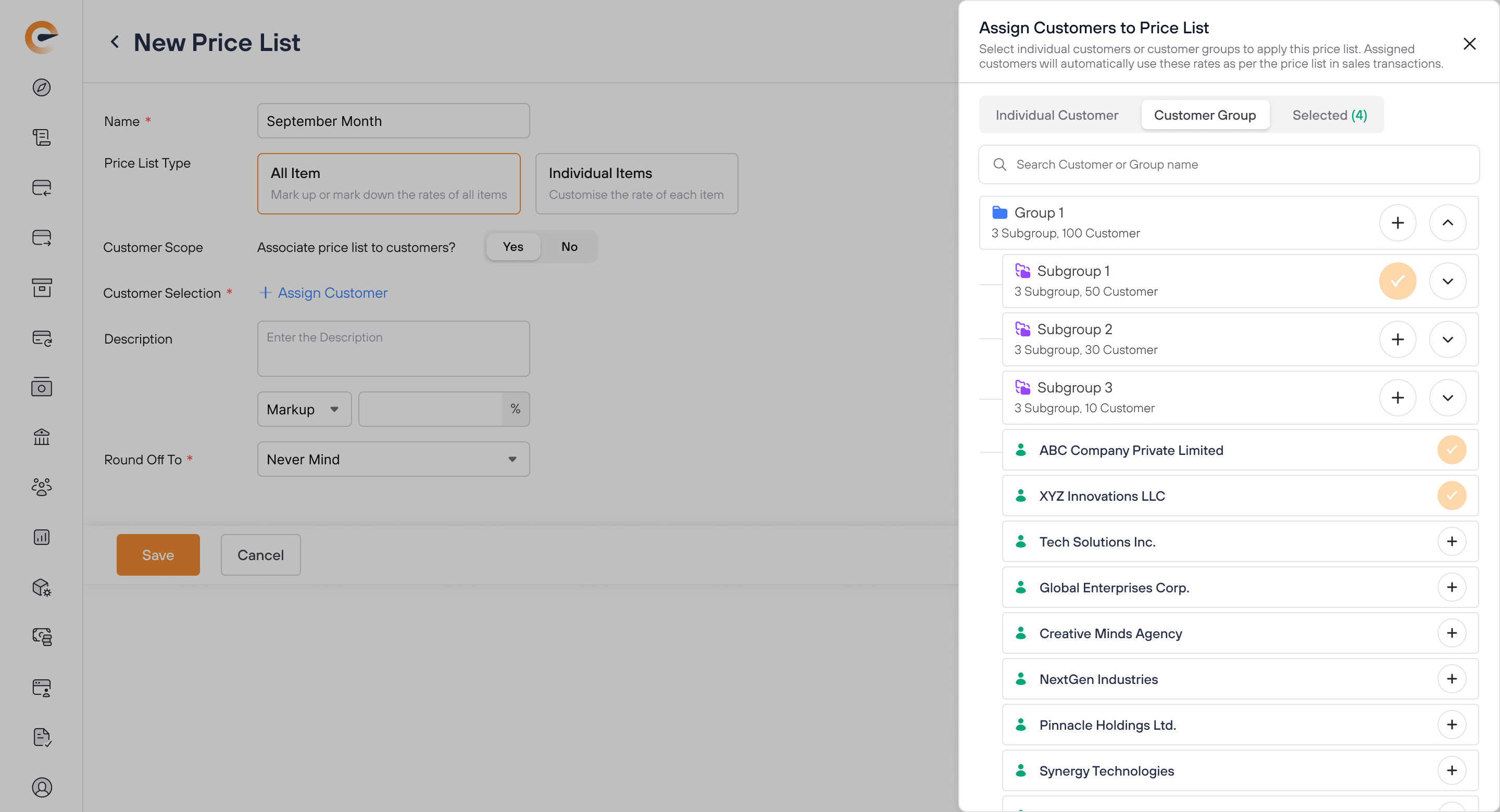
Step 2: The Tagging (In Effortless)
When you deploy the Effortless field sales software, the system syncs this logic.
You assign a strict rule: If Customer Group = "Retail South," then Force Price List = "Retail Level 3."
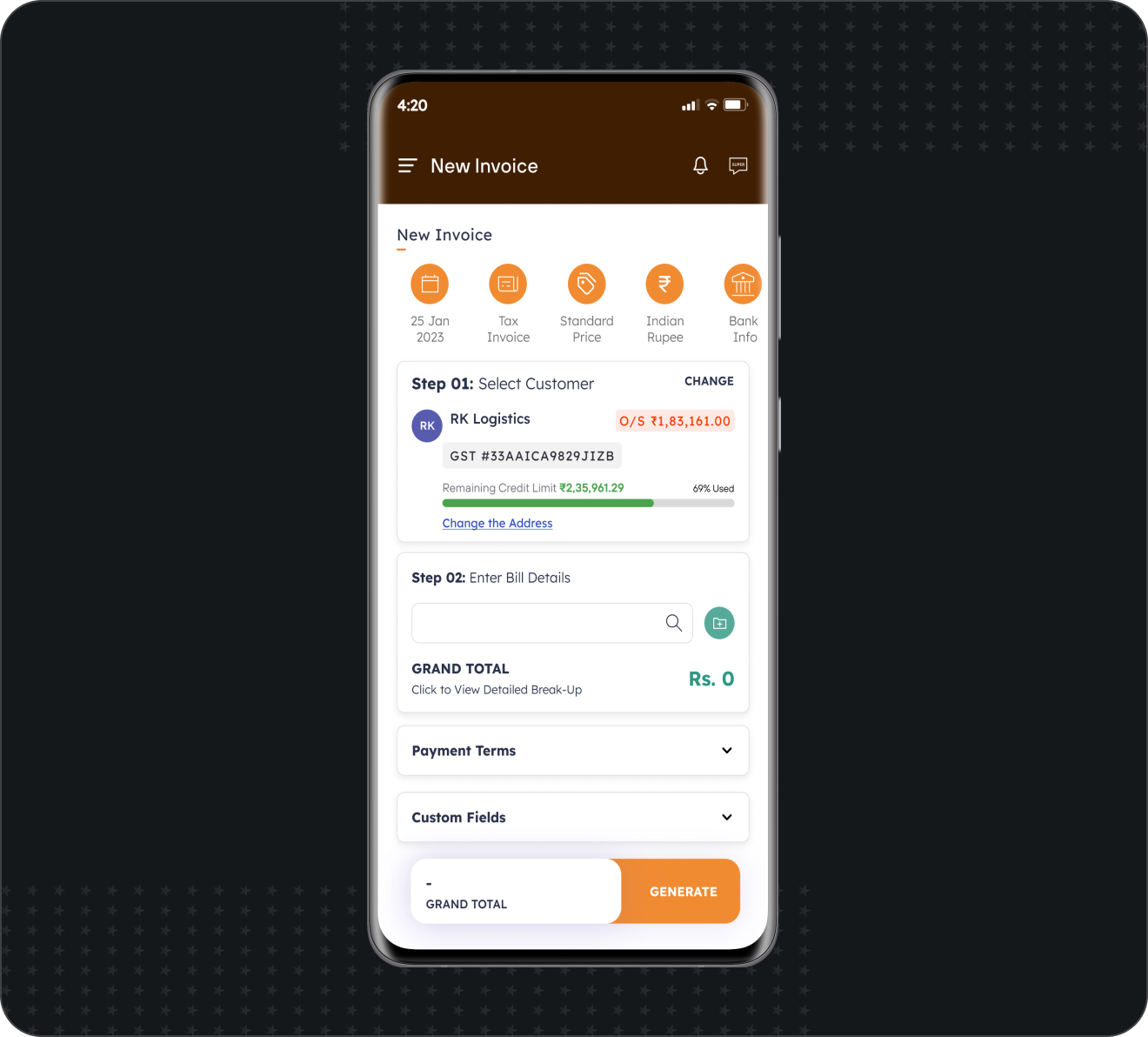
Step 3: The "Zero-Choice" Execution (On the Field)
The sales rep opens the sales order Android / iOS app at the customer's shop.
The Action: The rep selects the customer name (e.g., "Sharma Kirana").
The Automation: The moment the customer is selected, the Effortless app automatically loads the "Retail Level 3" pricing in the background.
The Result: When the rep browses the digital catalog and adds "10 Cases of Soap," the price populates automatically. The rep cannot see the wholesale price. The rep cannot edit the base rate. The rep cannot select a different price list.
4. Empowering the Rep Without Compromising Control
If you lock the base price, how does the sales rep negotiate?
Software user adoption strategies fail if you turn your sales reps into robots with zero flexibility. You must give them tools to close deals, but those tools must be governed by your rules.
The Controlled Flexibility Model:
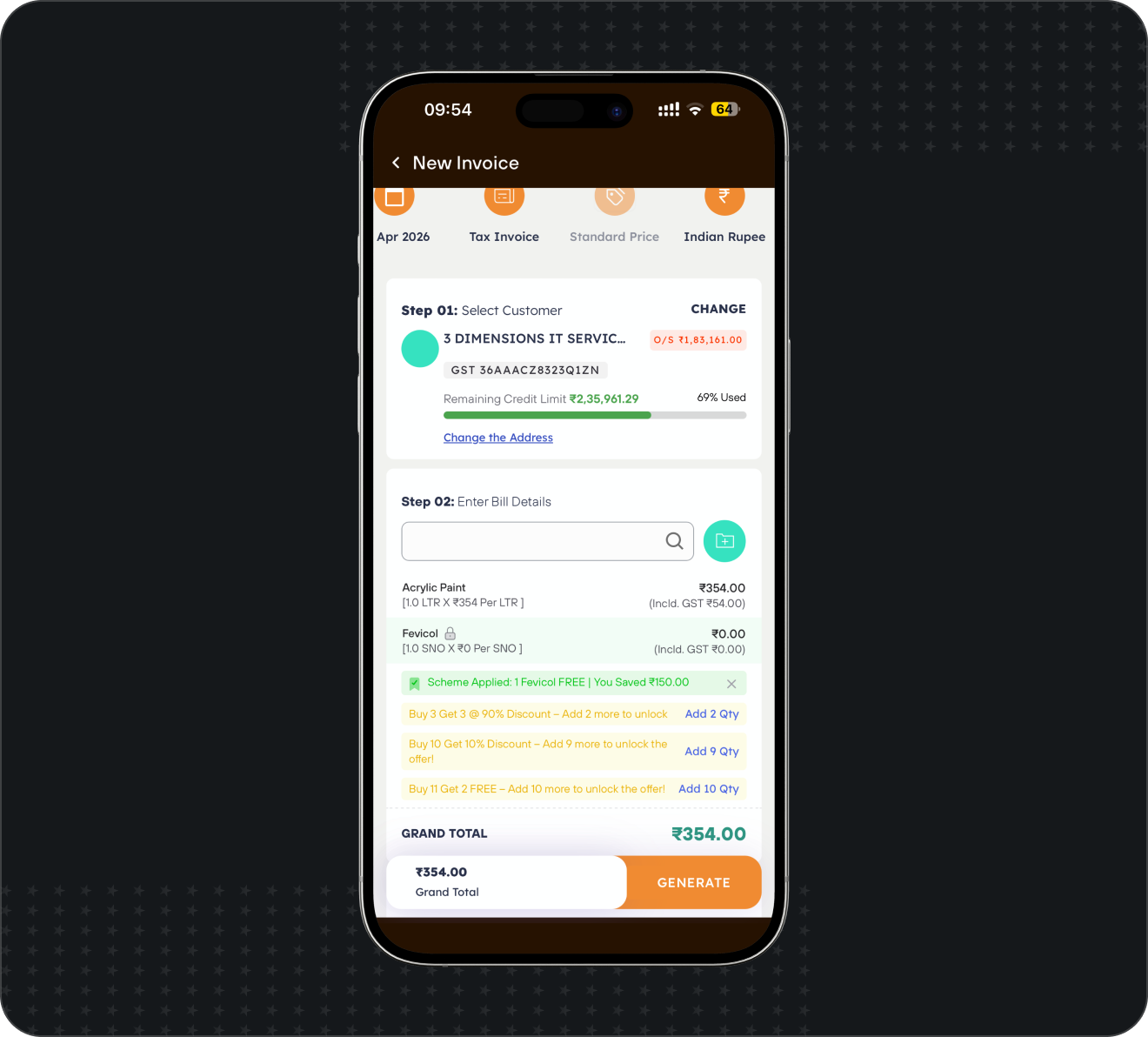
Instead of letting reps manipulate the base price, you let them apply controlled schemes.
The Base is Locked: Item X is always ₹100 for this customer tier.
The Scheme Engine: The app shows active, approved schemes: "Buy 50 units, get 2% off."
The Negotiation: The rep tells the customer, "Sir, the price is fixed at ₹100, but if you increase your order to 50 units, the system will automatically give you a 2% discount."
You have shifted the negotiation from "Price Dropping" to "Volume Upselling." The system remains the "Bad Guy" who locks the price, while the rep remains the "Good Guy" who finds a valid scheme to help the customer.
5. The Audit Trail of Pricing
In a manual setup, when an invoice comes to the Head Office with the wrong price, the blame game starts. "I told him ₹100, he wrote ₹95."
With Effortless, the Tally approval workflow is absolute.
The system enforces the tagged price list.
If a special situation arises where a deeper discount is truly warranted, the rep cannot change it locally. They must use the multi-level approval software to request an override.
The request goes to the Sales Director via the app. The Director clicks "Approve."
The resulting invoice in Tally carries the digital signature of that approval.
There are no "accidents." Every deviation from standard pricing is a deliberate, documented, and authorized business decision.
6. Conclusion: Code is the Best Sales Manager
You cannot scale a distribution network if your Area Managers are spending their days checking whether Junior Reps applied the correct pricing tier on paper order pads.
By implementing Price List Tagging in Effortless, you hardcode your margin strategy into the daily workflow of your sales team. You ensure that a Tier 3 retailer always gets a Tier 3 price, no matter who the sales rep is, how tired they are, or how aggressively the customer negotiates.
Stop giving away your margins by accident. Let the software hold the line.
Key Takeaways & FAQ
Q1: Can we tag different price lists for different branches?
A: Yes. In a Multi-branch GSTN billing solution, Effortless allows you to maintain localized pricing. A product might have a different price list in Mumbai compared to Chennai, and the system will auto-load the correct list based on the rep's mapped branch and customer.
Q2: What if a customer belongs to multiple categories?
A: Effortless hierarchy logic handles this. You can define primary and secondary groups, ensuring the system applies the most specific pricing rule assigned to that unique ledger in Tally.
Q3: Does the sales rep know they are restricted?
A: The experience is seamless for the rep. They just see "The Price." They don't have to navigate complex drop-downs to choose a price list; the system removes the cognitive load, allowing them to focus entirely on selling the product.
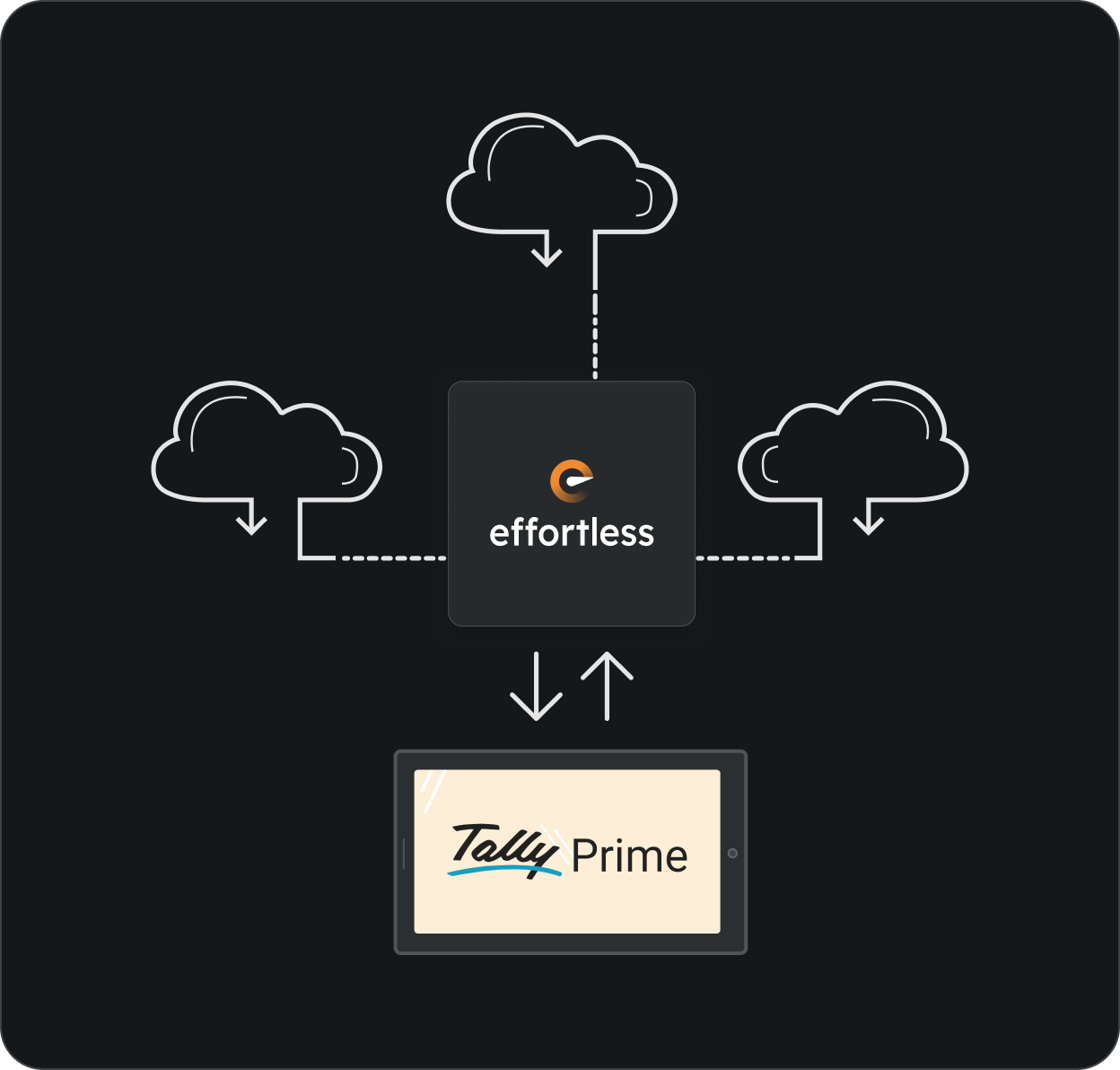
Q4: How does this sync back to Tally?
A: Effortless is a Tally-integrated sales app. When the order is pushed back to the office, it arrives as a Sales Order or Voucher with the exact pricing and scheme calculations applied, ready for instant e-invoice/E-WayBill generation. No manual verification by the accountant is required.
Q5: Can this be used for B2B eCommerce portals as well?
A: Absolutely. If you provide your retailers access to a customer self-ordering app or portal, the same Price List Tagging applies. When "Sharma Kirana" logs in, they only see their specific pricing, creating a personalized, Amazon-like B2B experience.
Suggested Reading from the Effortless Edge Blog
Complex Schemes Made Simple: Handling "Buy 10 Get 1" Logic – How to drive volume after locking the base price.
The "Credit Lock" Strategy: Stop Taking Orders from Defaulting Customers – Another crucial guardrail for your field team.
The ₹100 Cr Ceiling: Why Companies Stop Growing on Basic Tally – The limits of manual operations.
Single Draft Locking: Ending the "Who Edited This Invoice Last?" Chaos
Are your sales reps accidentally giving away your margins?
[See Pricing Automation in Action] and learn how to lock your profit today.
Growth Doesn't Wait. Why Should You?
Let Effortless help you scale—without the scramble.
Talk to Us
Have questions about how Effortless can transform your business? Our team of experts is ready to help.
- Schedule a personalized demo
- Get your specific questions answered
- Discuss your unique business challenges
We'll reach out within 4 business hours
Request Demo
See Effortless in action with a personalized demo tailored to your business.
- No generic presentations
- Focus on your specific challenges
- Get a clear picture of your potential ROI
Choose a time that works for you
Your Growth Engine Starts Here
More growth, less overhead. Discover how India's fastest growing businesses do it.
- Automate invoicing, collections & approvals
- Track sales team performance
- Get cashflow clarity in real-time
Clarity in 30 minutes. No pressure, just proof.